
 March 13, 2026 - BY Admin
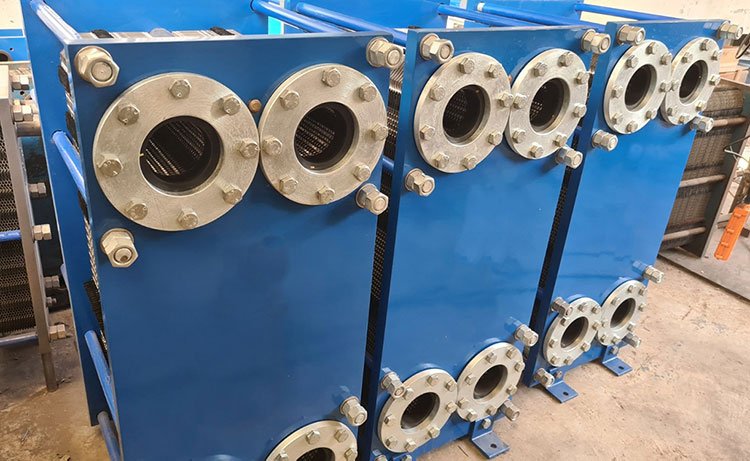
Plate heat exchangers (PHEs) are one of the most versatile and efficient heat transfer solutions available in modern industry. Designed with a compact, modular structure, they allow for high thermal conductivity and precise temperature control, making them suitable for a wide range of industrial applications. From HVAC systems to chemical processing, food and beverage production, and energy recovery systems, plate heat exchangers optimize processes and significantly improve energy efficiency.
The compact design of plate heat exchangers saves space and allows for easier installation compared to traditional shell-and-tube systems. Their high surface area-to-volume ratio ensures superior heat transfer performance, reducing energy consumption and operational costs. Additionally, PHEs are easy to maintain; individual plates can be removed, cleaned, or replaced without dismantling the entire system, minimizing downtime and maintenance expenses.
Another key advantage is flexibility and scalability. Industrial operators can add or remove plates to adjust capacity according to process requirements, making plate heat exchangers a future-proof solution for growing operations. They are also available in various materials to handle different fluids, pressures, and temperatures, ensuring compatibility with diverse industrial processes.
By adopting plate heat exchangers, industries benefit from efficient thermal management, lower energy consumption, reduced environmental impact, and improved process reliability. These advantages have made PHEs the preferred choice for businesses worldwide seeking high-performance, sustainable, and cost-effective heat transfer solutions.
In summary, plate heat exchangers combine compact design, high efficiency, easy maintenance, and scalability, unlocking operational efficiency and enabling industries to meet both production and sustainability goals effectively.